Posted by md
on November 10, 2009
All the electric power generated from renewable energy is good – no additional CO2 is produced. Saving energy in general is also a good idea – what you don’t consume, you don’t need to produce. But energy savings require you to understand your own energy consumption – you can’t improve what you can’t measure. A simple energy cost monitor is available for 10 Euro, but it requires you to plug it into different appliances in order to figure out what a specific device consumes. And only the more expensive ones log the power consumption over time, which is pretty interesting.
Continue reading…
Posted by md
on November 02, 2009

Green energy is good. Finally, people around the world begin to realize that the climate change is a serious problem for mankind. Driving with a car harms the environment – more efficient cars (or electric vehicles) are the new SUVs. On the other hand, a lot of energy is consumed in private households. In Germany, energy-efficient remodeling is rewarded with cheap credits. Often, solar power is used to heat water and generate electricity. More and more wind parks are built which also draw their energy from the sun, indirectly.
Unfortunately, renewable energy source create problems for the conventional power grids. In a power grid, demand and supply of electricity must match at all times. If a consumer draws power from it, the exact amount of power needs to be fed back into the power grid as fast as possible. There is almost no reservoir for electrical power (except for pump storage hydro power plants, but the capacity is limited). Since renewable energy sources such as solar and wind power cannot be planned additional power capacities need to be in place in order to compensate for the lack of power.
Continue reading…
Posted by md
on September 16, 2009
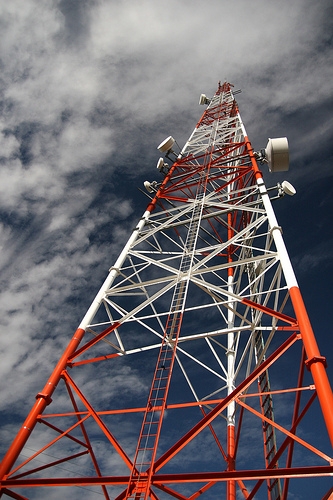
I live close to the DCF77 radio transmitter, so my signal was always pretty strong and clear. This is of course not the case for everybody :-) Gwen Roelants did run into problems. He writes:
Although your code works (thanks for that!) it looked like it was very sensitive to how the antenna was positioned.
I found that I did receive a signal every second, but that for the longer signals, I sometimes got a short flash interrupting it, causing the library to add 2 seconds instead of one. Since I got such a flash in almost every minute it could take a very long time before a proper sync was found, and because 2 seconds were counted the time would also drift during the time no new signal could be decoded.
I found a rather simple fix for your code that greatly improved the reliability and time to find a correct signal.
I don’t have an Arduino around so I did not test it, but the proposed changes seem to be reasonable. You can find the changes in the Arduino forums. Thanks, Gwen!
The photo was CCed on flickr by Nathan Gibbs.